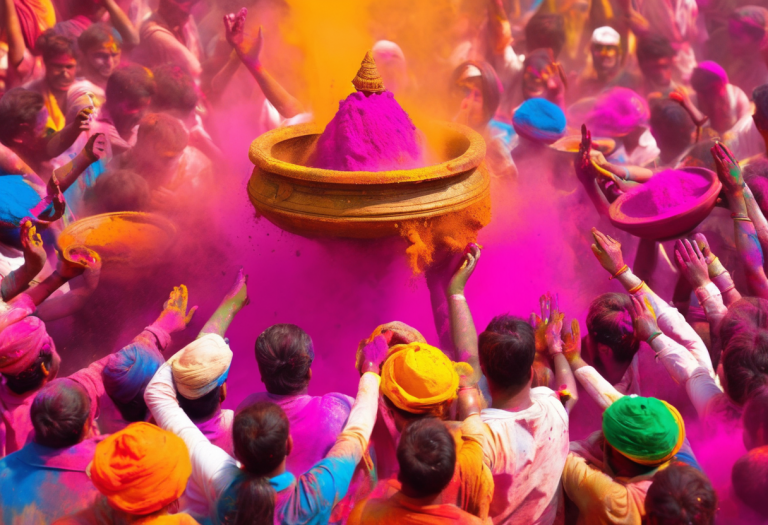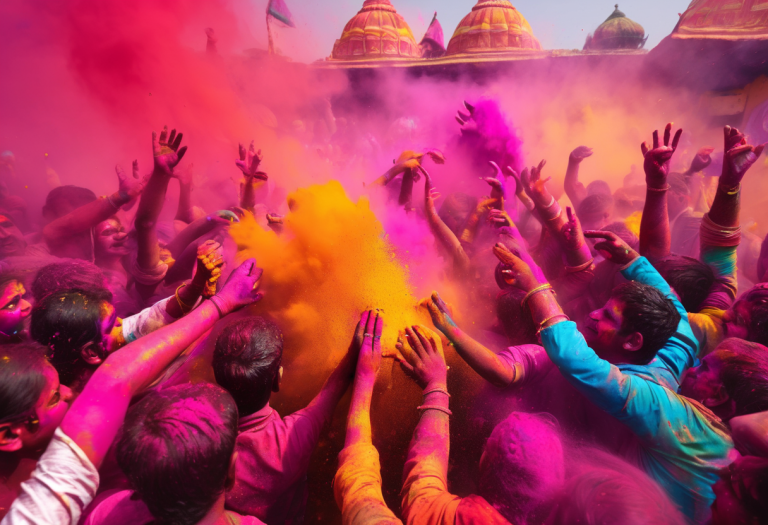

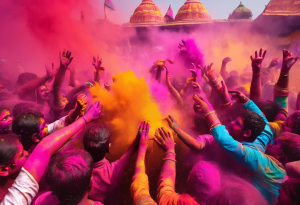
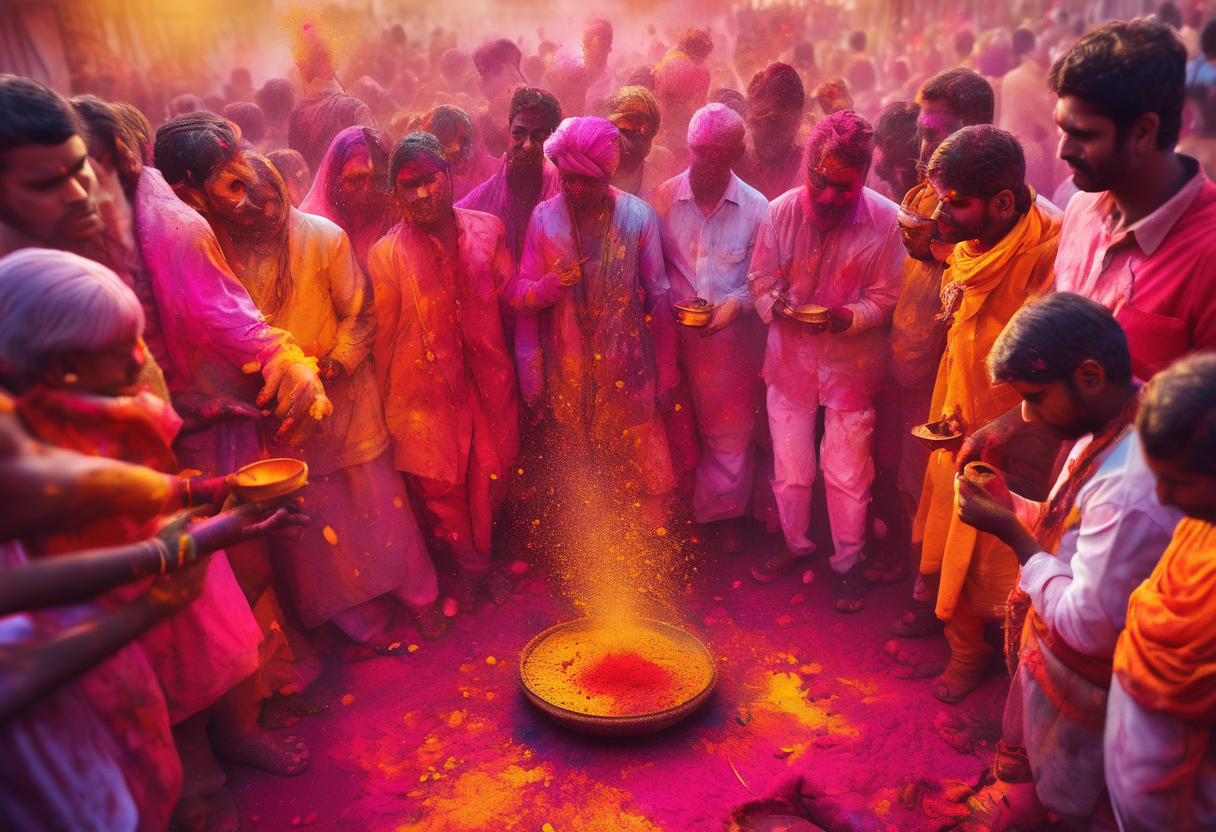
Holi, also known as the festival of colors, is one of the most popular and vibrant festivals celebrated in India. This festival signifies the triumph of good over evil and also marks the arrival of spring. With its roots deeply ingrained in Hindu mythology, Holi is not just a festival but a way of life for many people in India.
The traditional rituals and customs associated with Holi are an important part of this festival. The most iconic ritual is the playing of colors, where people smear each other with colorful powders and water. This act symbolizes the breaking of social barriers and spreading love and joy. Another ritual is the lighting of bonfires on the night before Holi, which represents the burning of evil and the beginning of a new, pure life. People also prepare special sweet dishes and offer them to friends and family as a token of love and affection.
Another custom observed during Holi is the traditional dance and music performances. People gather in open spaces, wear traditional clothes and dance to the beats of drums and other musical instruments. It is a joyous celebration of unity and harmony. Furthermore, people also visit temples and perform religious rituals to seek blessings and pray for a prosperous life.
In addition to these rituals, Holi is also a time for exchanging gifts and greetings with loved ones. It is a time to strengthen bonds and repair broken relationships. Families and friends come together to celebrate this festival and spread happiness and love.
In conclusion, the traditional rituals and customs observed during Holi add depth and meaning to this colorful festival. They not only bring people together but also teach us the values of love, unity, and happiness. Holi truly embodies the essence of Indian culture and is a celebration of life itself.